In high risk industries like construction, manufacturing, offshore oil & gas and utilities where safety is paramount, investigating an incident is just the beginning. It’s the why behind the incident that’s really where the value lies getting to the bottom of what actually went wrong & making sure those mistakes don’t happen all over again. This is the point where Root Cause Analysis (RCA) Techniques for HSE Teams come into play.
Rather than just slapping people with blame, root cause analysis techniques allow HSE teams to get to the root of what went wrong the underlying faults in processes, training, or management systems that let things slip up. By using the right root cause analysis tools & techniques, companies can actually see some real improvements in their safety record, get their ISO & OSHA compliance in order, and create a culture that is always pushing forward.
What Are Root Cause Analysis Techniques?
Root cause analysis (RCA) is a structured approach used to identify the
fundamental cause of an incident, equipment failure, near miss, or non conformance. Instead of addressing only the immediate problem, techniques for root cause analysis investigate the chain of events that allowed the incident to occur.
For HSE teams, RCA is a critical component of incident investigation and root cause analysis, helping organizations implement effective corrective and preventive actions (CAPA) rather than temporary fixes.
Why Root Cause Analysis Matters in HSE
Every workplace accident has a bunch of different factors that contributed to it. For example, if an employee slips on a spill, it might seem like the problem is just the wet floor. But really, you need to dig deeper and look at things like whether housekeeping was being done regularly, whether the equipment was properly maintained, if the supervisors were doing their jobs right and whether inspections were happening on a regular basis.
When you use the best root cause analysis techniques, its helps you:
- Prevent repeat incidents and recurring hazards
- Make sure you are in compliance with OSHA and ISO 45001
- Make operations more reliable and safer
- Help your organisation keep getting better all the time
- Enhance worker confidence and safety culture
- Reduce downtime, investigation costs, and production losses
For industries operating complex assets and hazardous environments, effective RCA directly contributes to operational excellence.
Core Root Cause Analysis Techniques for HSE Teams
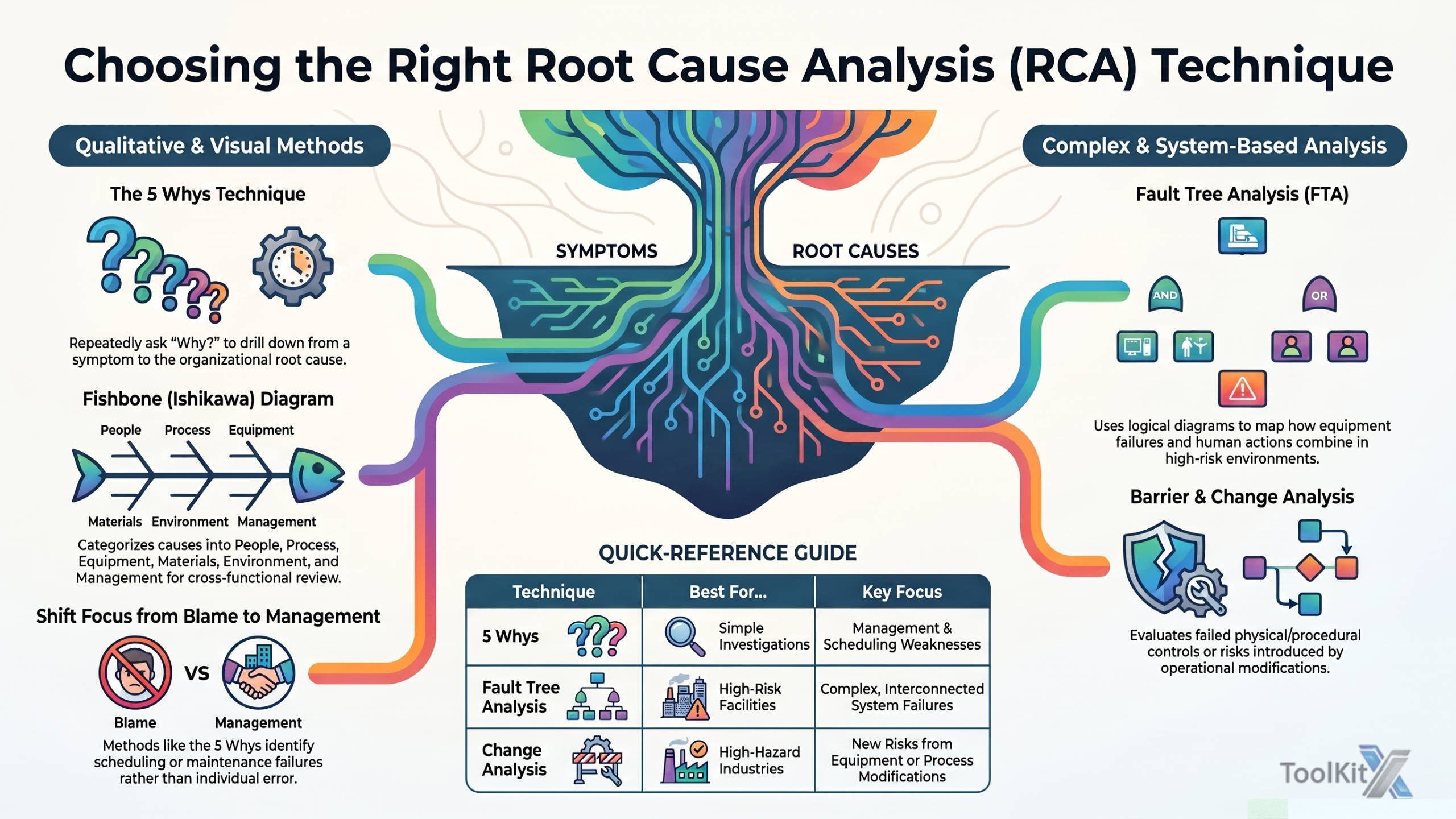
Different incidents are going to need to be investigated in different ways it all depends on the situation. What kind of incident are we looking at? how much evidence have we got to work with? and what sort of environment are we operating in. It's these factors that will decide which root cause analysis technique is the best one to use.
-
5 Whys Technique for Root Cause Analysis
The 5 Whys technique is probably the most popular root cause analysis tool out there. And that's because it's deceptively simple. All you do is ask Why? over and over (and over) again till you get to the heart of the matter all that's gone wrong in terms of the way a certain process runs.
Example:
- Worker slipped.
- Why? Oil leaked onto the floor.
- Why? Pump seal failed.
- Why? Preventive maintenance was overdue.
- Why? Maintenance scheduling process was ineffective.
Rather than blaming the employee, the 5 whys root cause analysis technique identifies weaknesses in maintenance management.
-
Fishbone (Ishikawa) Diagram
The fishbone technique for root cause analysis categorizes possible causes into areas such as:
- People
- Process
- Equipment
- Materials
- Environment
- Management
This visual method helps HSE teams evaluate multiple contributing factors simultaneously and is particularly effective during cross functional investigations.
-
Fault Tree Analysis (FTA)
Fault Tree Analysis uses logical diagrams to determine how multiple equipment failures or human actions combine to create a hazardous event.
It is commonly applied in:
- Offshore oil and gas facilities
- Chemical processing plants
- Utilities
- High risk manufacturing operations
FTA is valuable when investigating complex failures involving multiple systems.
-
Barrier Analysis
Barrier Analysis examines which physical, administrative, or procedural controls failed to prevent an incident.
Examples include:
- Missing machine guards
- Ineffective permit to work procedures
- Inadequate lockout/tagout controls
- Insufficient PPE requirements
This method supports both root cause analysis risk management and process safety improvement.
-
Change Analysis
Many incidents occur following operational changes.
Change Analysis evaluates whether modifications to equipment, personnel, procedures, contractors, or production processes introduced new risks that were not adequately managed.
It complements Management of Change (MoC) programs in high hazard industries.
Choosing the Right Root Cause Analysis Method
There are 7 different root cause analysis techniques commonly used across industries, but no single method fits every investigation.
|
Investigation Scenario
|
Recommended RCA Technique
|
|
Minor workplace incident
|
5 Whys
|
|
Equipment failure
|
Fault Tree Analysis
|
|
Process deviation
|
Fishbone Diagram
|
|
Permit to work failure
|
Barrier Analysis
|
|
Operational change
|
Change Analysis
|
The goal is not to apply every method but to select the common technique used during root cause analysis that best matches the complexity of the incident.
Best Practices for Effective Root Cause Analysis
Successful investigations require more than selecting the right tool. HSE teams should follow these proven practices:
- Preserve the incident scene and collect evidence promptly.
- Interview witnesses using open ended questions.
- Review maintenance records, procedures, permits, and training documentation.
- Differentiate between immediate, contributing, and root causes.
- Focus on system failures rather than individual blame.
- Verify that corrective actions eliminate the identified root cause.
- Share lessons learned across departments and sites.
Organizations that consistently apply these practices improve both safety performance and organizational learning.
Industry Applications of Root Cause Analysis
Construction: Take a close look at falls from height that's to say, investigate any cases where people have fallen from heights scaffold failures and permit to work deviations as well. All this is to get a better grip on site controls and supervision.
Manufacturing: Analyze machine breakdowns, quality defects, and maintenance failures using structured root cause analysis methods techniques to reduce production disruptions.
Offshore Oil & Gas: After a process safety event, equipment failure or hydrocarbon release, apply some very advanced root cause analysis methods to improve asset integrity and stay on the right side of the regulators.
Root cause analysis in all these industries does a great deal to get operations running more safely and not just that but also more efficiently and with better business results.
Digitalizing Root Cause Analysis
Traditional investigations often rely on paper forms, jumbled up spreadsheets and a lot of manual effort. So it's not easy to keep track of corrective actions or spot recurring trends.
Modern HSE platforms like ToolKitX bring root cause analysis and incident investigation under one digital roof, so to speak. This means organisations can capture all the evidence they need on the ground, assign corrective actions, check who's doing what and when, and then see how often the same problems pop up again, all in one go. This all adds up to stronger accountability and a really tangible chance to keep on improving, even across lots of different sites.
Conclusion
Implementing a solid Root Cause Analysis (RCA) Techniques for HSE Teams is critical for stopping incidents from happening again, making your operations more resilient and building a culture where everyone takes safety seriously. Whether using the 5 Whys technique for root cause analysis, Fishbone Diagrams, Fault Tree Analysis, or Barrier Analysis, the objective remains the same: identify and eliminate the underlying causes not just the visible symptoms.
By mixing high quality root cause analysis techniques with the latest industry thinking and digital tools, you can turn your safety investigations into genuine game changers, make sure you're ticking all the boxes when it comes to standards like ISO 45001 and track real improvement in workplace safety and operational performance.
Want to improve your incident investigation then maybe you should take a look at how a top notch digital HSE platform can simplify Root Cause Analysis, do better on your corrective action management and keep improving your safety performance across the board