There are a whole host of risks that industrial operations which work with hazardous chemicals and flammable substances, plus high energy procedures face. Its not just about having an accident on site a single process fail can end in a fire, explosion, toxic release, environmental damage and business being brought to a grinding halt. This is where Process Safety Management (PSM) comes in its crucial.
Understanding what is process safety management is especially important for companies working in chemical processing, oil and gas manufacture, manufacturing, energy production and other high risk industries.
What Is Process Safety Management?
Process Safety Management (PSM) or for short PSM is a systematic way of identifying, evaluating, and then controlling the hazards that come with industrial processes that involve highly hazardous chemicals or potentially hazardous operating conditions.
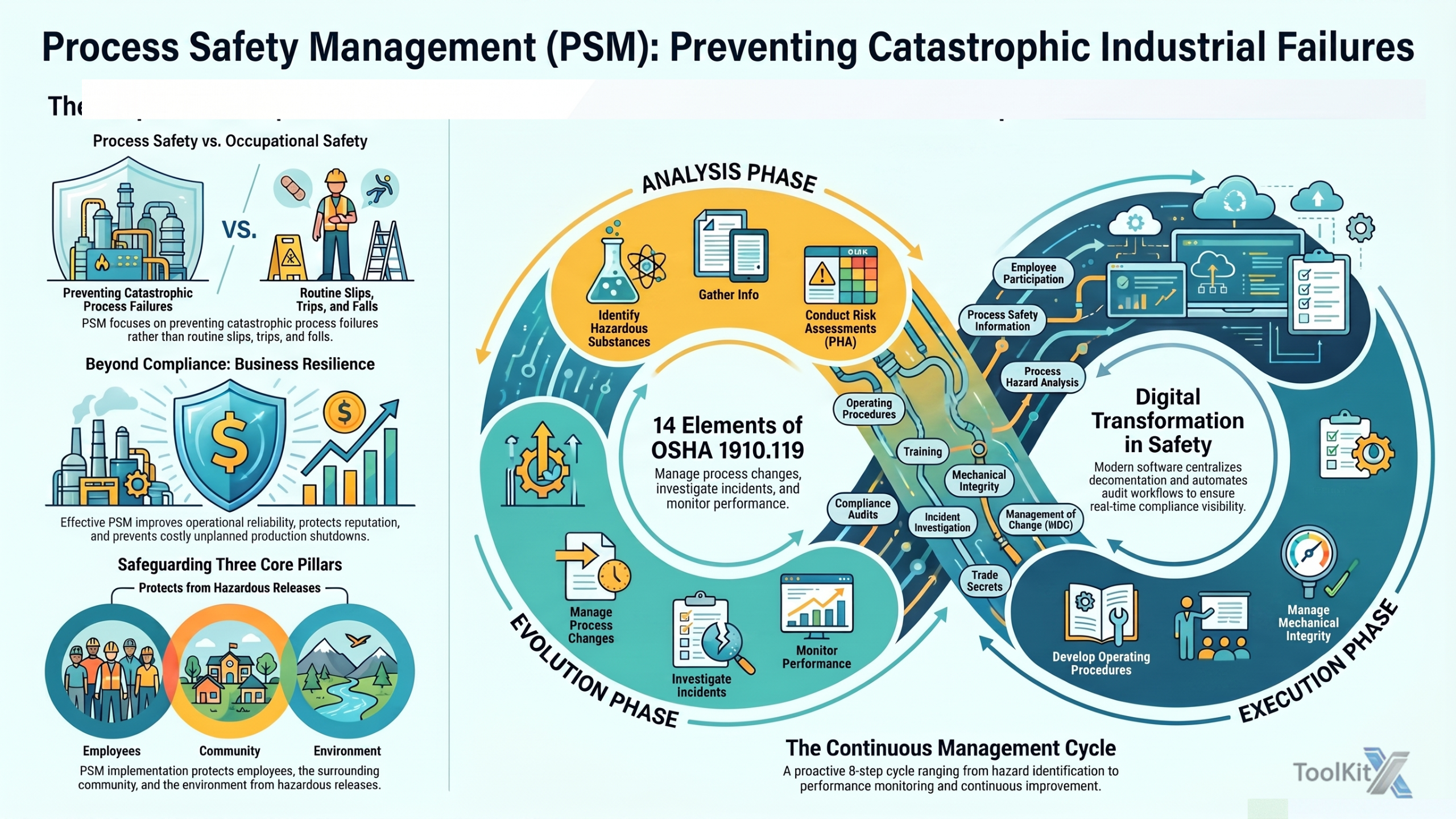
To put it simply, PSM is a way of preventing big incidents from happening not just everyday occupational injuries. Its a structured framework designed to keep you safe.
The OSHA Process Safety Management Standard, also known as OSHA 1910.119 or the OSHA PSM standard, provides a framework that has to be followed by companies who have certain quantities of hazardous chemicals on site. This framework helps organisations to reduce the risk of major incidents.
By contrast, traditional safety tends to focus on preventing slips, trips and falls etc . Industrial process safety is all about preventing large scale process failures that could impact workers, communities and the environment.
Why Is Process Safety Management Important?
Big process incidents often happen when loads of safety measures fail all at once. PSM is all about helping organisations to prevent these things from happening.
An effective PSM program will give you a number of benefits, including:
- Reducing the risk of fires, explosions and toxic releases
- Improving operational reliability and asset integrity
- Helping you meet regulatory requirements
- Saving you money by reducing unplanned shutdowns and production losses
- Strengthening your emergency response and planning
- Protecting your employees, contractors and the local community
For industries like offshore oil and gas, chemical manufacturing and renewable energy, process safety and risk management is not something that is just required by law it is also a basic business necessity that affects operational continuity and reputation.
How Does Process Safety Management Work?
A process safety management system brings together people, procedures, technology and leadership to identify hazards and control process risks.
A typical PSM program is a continuous cycle:
- Identify hazardous processes and substances
- Gather process safety information
- Carry out a risk assessment
- Develop operating procedures
- Train the team
- Manage process changes
- Investigate incidents and near misses
- Monitor performance and keep on improving
This structured approach enables organisations to manage risks all the way through the process lifecycle.
The 14 Elements of Process Safety Management
The 14 elements of process safety management form the foundation of the OSHA process safety management standard. These PSM elements work together to give you a comprehensive safety framework.
The 14 elements of PSM are:
- Employee Involvement
- Process Safety Information
- Process Hazard Analysis
- Operating Procedures
- Training and competence
- Contractor control
- Pre Start Safety Review
- Mechanical Integrity
- Hot Work Permits
- Management of Change
- Incident Investigation
- Emergency Planning and Response
- Compliance Audits
- Trade Secrets
Companies that effectively implement these process safety management elements are likely to be better at identifying risks and preventing big incidents.
Process Hazard Analysis and Training
One of the most important bits of chemical process safety is Process Hazard Analysis (PHA). PHA is a way of systematically assessing process risks and identifying potential failure scenarios.
Many companies invest in process hazard analysis training, process safety training and process safety management training to build up internal expertise. This training gives engineers, operators and managers the practical knowledge they need to identify hazards and reduce risk.
A qualified process safety engineer often has a key role in facilitating hazard assessments, supporting incident investigations and developing risk reduction strategies.
Some professionals also do process safety management certification and PSM safety training to give themselves a better understanding of regulatory requirements and industry best practice.
Process Safety Management in Real Industrial Environments
Think of a chemical manufacturing plant that stores flammable materials under a lot of pressure. Without proper safeguarding, equipment failure could end in a fire or explosion.
An effective PSM facility will have things in place like:
- Procedures for hazard identification
- Mechanical integrity inspections
- Change management processes
- Incident investigation programs
- Emergency response plans
- Regular audits and performance reviews
In offshore oil and gas operations, fire safety and risk management in chemical process industries requires strict control over equipment integrity, permit systems and operating procedures.
Many companies also use process safety consulting, process hazard consulting and specialist safety management solutions providers to evaluate their existing programs and see where they can be improved. Companies often seek out independent assessments and industry expertise, and often search for the best process safety consulting services for their chemical processing facilities.
Digital Transformation in Process Safety Management
Organizations are increasingly turning to technology to get a better handle on their process safety performance.
Digital process safety management software can really make a difference for companies by:
- bringing all your process safety documents together in one place
- helping you manage the steps needed to correct problems
- keeping track of the incidents that nearly happened
- making sure you're on top of all compliance activities
- automating those tedious audit workflows
- actually being able to see how your performance has improved over time with the help of performance dashboards
You can see how tools such as ToolKitX are showing the value of digital solutions in supporting operational excellence by making safety management processes more transparent, consistent and always open to improvement.
Conclusion
We all know that process safety management is about more than just ticking regulatory boxes its about giving yourself a framework for genuinely preventing the worst kind of disasters, protecting the people who work for you and your business, and just making sure you can bounce back from a crisis.
Whether you're introducing a new process safety management system, reinforcing an existing one, or investing in some process safety training, organisations that take a proactive approach to managing process risks are much more likely to achieve safer, more reliable operations.
As the processes get more complicated, integrating robust process safety practices with digital tools and continuous improvement initiatives will be more and more central to what makes a company operationally excellent.