Construction sites are always buzzing with activity you've got multiple things happening at the same time, with workers operating heavy equipment, excavation work, hooking up electrical, and working at heights all in the same little patch of land. While this can certainly get a project moving along at a good clip all this commotion does create a whole host of hazards and risks that can spell real trouble if you don't get on top of them.
At the end of the day how to prevent accidents on a construction site really matters whether you're a contractor or a developer it's something you've got to get your head around. Good site safety it does the obvious things like keeping people safe but it also helps a site run more smoothly, saves time and hassle, and means you're in compliance with all the health and safety responsibilities. But more than that getting this right sets a tone where people are always on the lookout for potential risks and not just trying to tick off a few boxes at the end of the week.
Why Is Health and Safety Important in Construction?
Health and Safety in Construction its all about keeping people safe while still getting the job done quick and right. The definition of health and safety extends beyond compliance with regulations, its about having all the right systems in place so you can prevent accidents and weird incidents from happening in the first place.
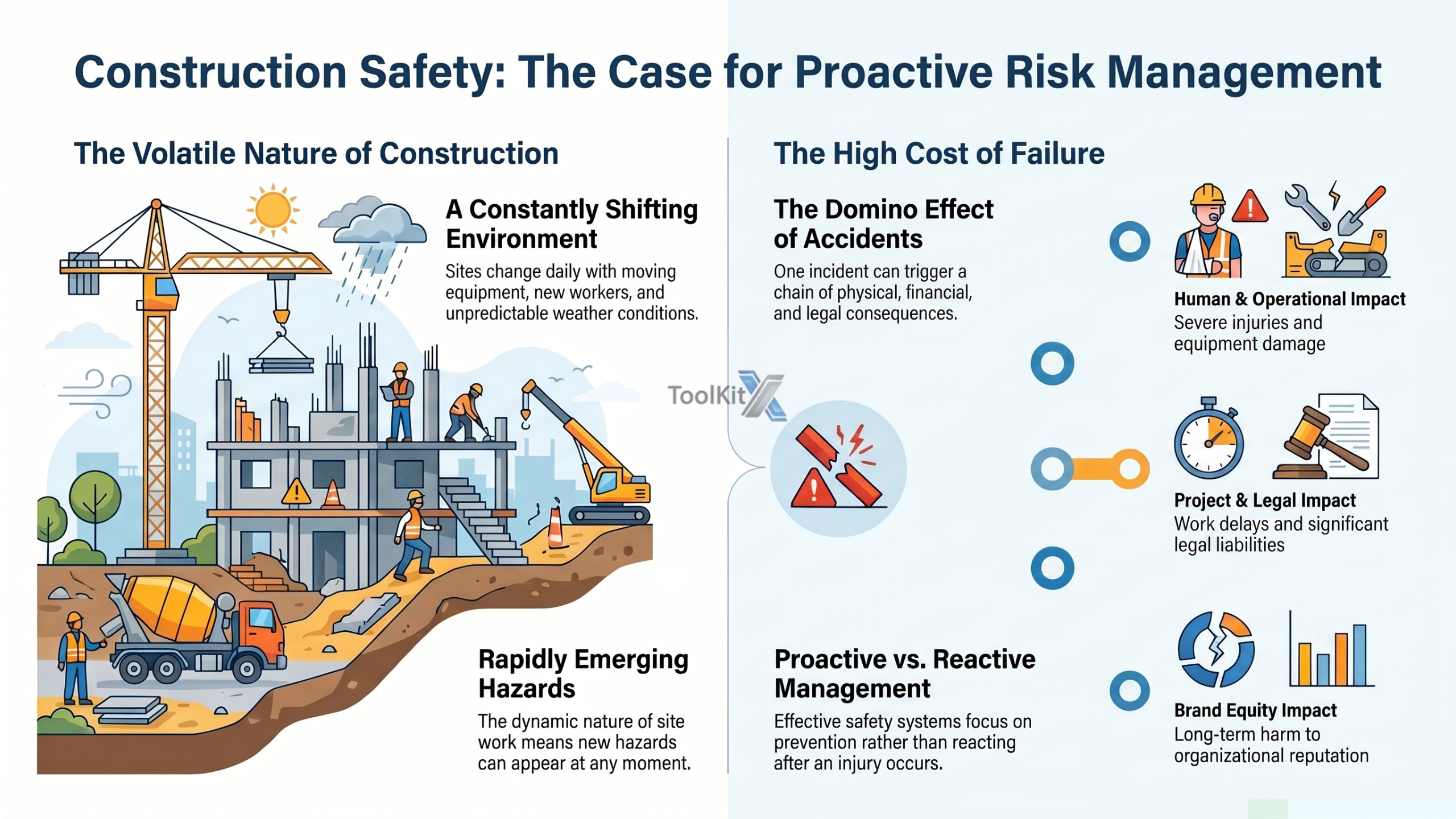
Constructions a pretty high risk industry anyway site is always changing, got new workers coming in all the time, equipment's being moved around and the weather can go sour at any minute. So with all that going on, new hazards in the workplace can pop up at any moment and before you know it you're in a world of trouble.
The importance of health and safety becomes particularly evident when incidents occur. A single accident can cause severe injuries, equipment damage, project delays, legal liabilities, and reputational harm. This is why health and safety management ensures organizations adopt a proactive approach to risk management in construction projects rather than reacting after incidents happen.
What Is Construction Site Safety?
Construction site safety refers to the policies, procedures, and control measures used to prevent accidents and manage workplace hazards during construction activities. It encompasses everything from construction risk assessment and safety procedures to emergency preparedness and incident investigation.
Effective construction site health and safety requires organizations to continuously identify hazards, evaluate risks, implement controls, and monitor their effectiveness. Whether constructing commercial buildings, renewable energy facilities, manufacturing plants, or infrastructure projects, maintaining safety in site operations is essential for protecting both people and business performance.
Understanding Construction Hazards and Risks
Before preventing accidents actually happens, you've got to get your head around what's exactly the difference between hazards & risk.
A safety hazard definition isn't exactly rocket science its anything thats got the potential to do some harm. Think unprotected edges, exposed cables, machinery thats in motion, all sorts of hazardous substances, and an excavation that's just begging to collapse. On the other hand, risk in construction is about how likely its that a hazard is gonna cause an injury and how bad that injury could be.
Construction site hazards come from just about every activity that goes on out there on the ground. Falls from a height are a major hazards in the construction industry you see them a lot in roofing, scaffolding, and structural steel work. And its not just that people are also at risk of being knocked over by a moving vehicle, a falling material or a suspended load.
If you're in excavation work, you've got your own set of risks to deal with. A trench can collapse at any moment, you could knock a hole in some underground service or get trapped in a confined space its all just a recipe for disaster if you dont put some safety procedures in place. Electrical work, housekeeping, lifting, and fires all add to the mix and just raise your risk level even more on a construction project.
Understanding hazards and risks lets you actually do something about it and not just sit around waiting to see what happens after the damage is done.
How to Prevent Accidents on a Construction Site Through Construction Risk Assessment
One of the most effective ways to stop construction accidents dead in their tracks is with a comprehensive Construction Risk Assessment.
Risk assessment in construction involves systematically identifying hazards, evaluating risks, and implementing suitable control measures. Because construction activities and environments constantly change, risk assessment for construction work should be treated as an ongoing process rather than a one time exercise.
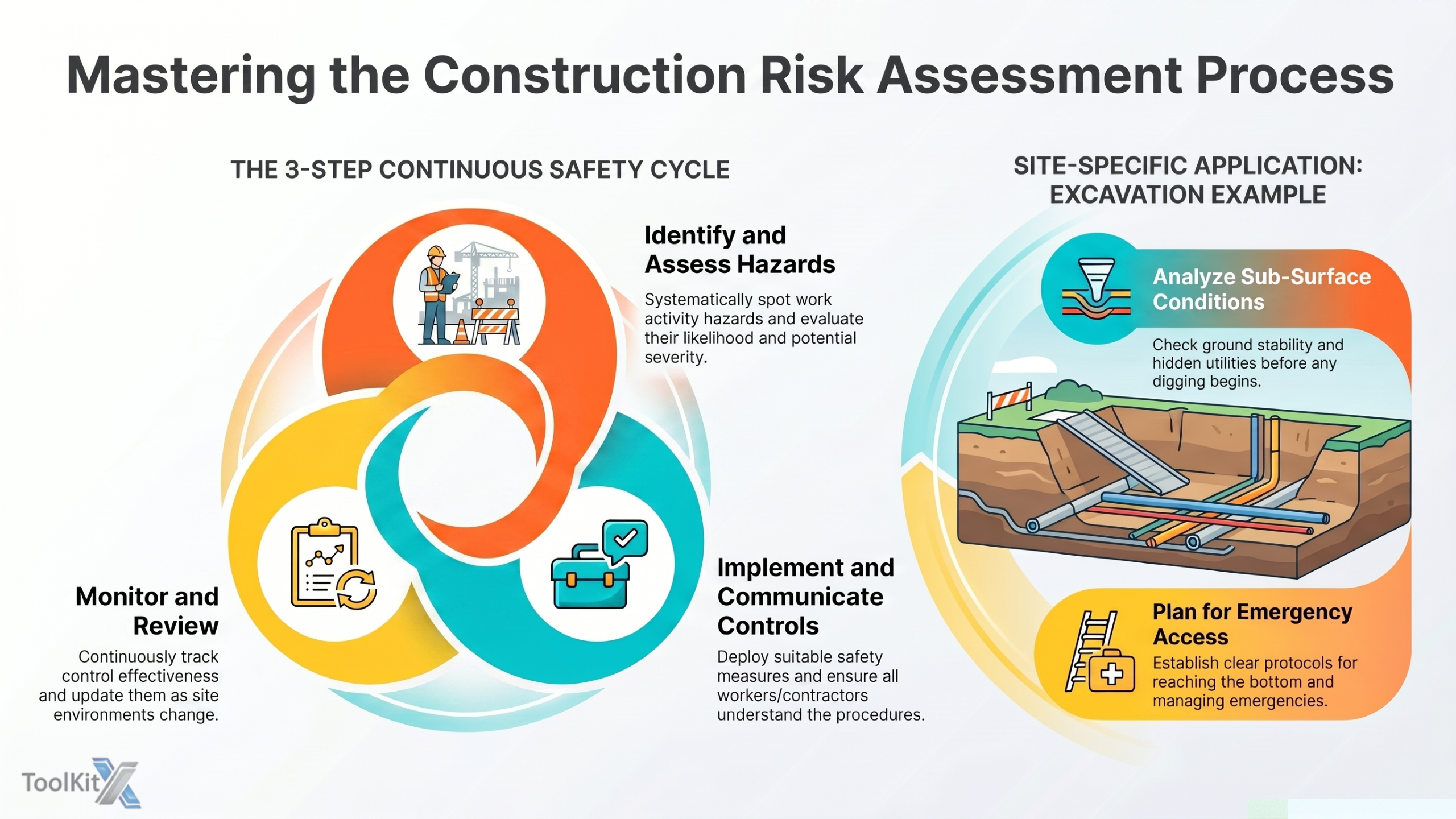
A practical construction site risk assessment process typically includes:
- Identify hazards associated with the work activity.
- Assess the likelihood and severity of potential consequences.
- Implement risk assessment control measures.
- Communicate safety procedures to workers and contractors.
- Monitor and review controls throughout the project.
For example, before you start digging you should go through the basics ground conditions, what's lurking beneath the surface, how you're going to get to the bottom, and what happens in an emergency a basic site specific risk assessment lets you spot hazards that don't show up on other jobs and put specific controls in place to deal with them.
Apply the Principles of Prevention
The principles of prevention focus on controlling hazards at their source whenever possible.
A lot of companies rely on personal protective gear, but let's face it PPE is usually just a last resort. Construction Risk Management done right starts with nipping hazards in the bud. If it's not possible to eliminate a hazard altogether and sometimes that's just the way it is you should at least try to find a safer way to do things.
Engineering controls like guardrails, machine guards, and physical barriers tend to do a much better job of keeping you safe than relying on rules and regulations alone. But you still need to back all that up with basic things like Safe Systems of Work, good supervision, sensible permit procedures and decent training.
By getting into the habit of applying the hierarchy of controls you can seriously cut down on the amount of time your people are exposed to workplace dangers and make your work place that much safer overall.
Health and Safety Responsibilities of Employers and Employees
Construction health and safety is a shared responsibility.
Health and safety responsibilities of employers and let's face it, these are pretty straightforward you've got to make sure you've got safe systems of work in place, do regular risk assessments, keep all your gear in decent nick, sort out the right training for people and make sure you've got a proper accident plan in place. Employers responsibilities for health and safety also extend to ensuring contractors and subcontractors understand and5t43 comply with site requirements.
But here's the thing construction safety just isn't going to happen if it's all left up to management. Employee health and safety responsibilities are just as important your average Joe on the site has got a big part to play in stopping accidents from happening. And it's not just a case of following procedure and wearing a hard hat employees responsibility for health and safety means keeping an eye out for hazards, reporting anything wrong and getting involved in the safety initiatives that are going on.
And workers responsibilities for health and safety go a little further than that too it's about doing what your supervisor tells you to do, and getting on the phone to report any dodgy conditions before they turn into a major incident.
Best Practices for Managing Health and Safety on Construction Sites
Effective construction safety management goes beyond regulatory compliance and focuses on building a proactive safety culture.
Plan the Construction Site Layout
Understanding how to plan a construction site layout is fundamental to reducing accidents. Poorly organized sites often contribute to vehicle collisions, restricted access, material handling incidents, and emergency response delays.
A well laid out construction site should make it crystal clear where pedestrians should be walking, where materials and equipment are stored, where vehicles are operating and where the emergency exits are. Proper planning makes a huge difference and reduces the risk of hazards on workplace and improves overall efficiency.
Get Your Permit to Work Systems in Place
Certain activities require additional controls due to their elevated risks. Knowing how to handle construction permits and permit to work systems helps organizations manage activities such as hot work, excavation, confined space entry, and electrical isolation.
Conduct Regular Safety Inspections
Workplace Safety inspections are not a one off thing they need to be done regularly throughout the project. Construction sites can change fast and new hazards can pop up overnight.
Regular safety inspections help identify things like equipment that needs to be fixed, poor housekeeping and procedures that aren't working as they should and sort them out before someone gets hurt.
Encourage Near Miss Reporting
Learning from when things nearly go wrong is what makes construction risk control tick and supports constant improvement in health and safety management.
Using Incident Management to Improve Construction Safety
Even with robust preventive measures, incidents can still occur. This makes incident management an essential component of construction health and safety.
Organizations that actively learn from incidents often experience significant improvements in risk management in construction industry operations because they continually strengthen their controls and procedures.
Digital Construction Safety Management and the Future of Site Safety
Modern digital solutions help organizations streamline health and safety procedures by centralizing information and improving access to real time data.
Platforms such as ToolKitX are increasingly being adopted as part of broader operational excellence initiatives to support construction site health and safety processes, improve visibility across projects, and facilitate proactive risk management.
Conclusion
Understanding how to prevent accidents on a construction site requires much more than enforcing rules and safety procedures. Effective construction safety management depends on identifying hazards, conducting construction risk assessments, implementing preventive controls, and fostering shared accountability between employers and workers.
Any construction project has a load of inherent dangers but most of the time its entirely preventable if you take a more forward thinking and systematic approach to safety on a building site. By having leaders who really care, sound incident management, keeping a close eye on things and making the most of all the latest digital tools, you can cut down risks, improve how you do things and build a job that's safe for everyone and still delivers the goods.
As construction projects become increasingly complex, investing in proactive health and safety management is one of the most effective strategies for preventing accidents and achieving long term project success.
Frequently Asked Questions
What are the risks of working on a construction site?
Common risks include falls from height, struck by incidents, electrical hazards, excavation failures, fire risks, and manual handling injuries. These hazards can result in injuries, fatalities, project delays, and financial losses.
Why is health and safety important in construction?
Health and safety in construction protects workers, reduces operational disruptions, improves productivity, and helps organizations comply with legal and regulatory requirements.
What safety measures are needed on a construction site?
Effective safety measures include risk assessments, permit to work systems,
PPE, safety inspections, emergency procedures, training, hazard reporting, and continuous monitoring.
What are the employers responsibilities for health and safety?
Employers are responsible for providing safe systems of work, conducting risk assessments, delivering training, maintaining equipment, and implementing effective safety procedures.
What are the employees responsibilities for health and safety?
Employees should follow procedures, use PPE correctly, report hazards, participate in training, and cooperate with safety requirements to maintain a safe workplace.
How often should construction risk assessments be reviewed?
Risk assessments should be reviewed whenever work activities change, new hazards emerge, incidents occur, or project phases progress.
How can digital systems improve construction safety?
Digital systems improve visibility, simplify incident reporting, automate inspections, manage permits, track corrective actions, and provide real time safety insights across construction projects.