Crane safety hazards can cause severe injuries, dropped loads, equipment damage and project delays. Safe lifting requires more than skilled operation: teams must assess the site, confirm load capacity, inspect equipment and coordinate everyone near the lift. Understanding common risks and matching each one with a clear control helps prevent accidents on construction sites and in industrial facilities.
Common Crane Safety Hazards and Control Measures
-
Overloading and overturning
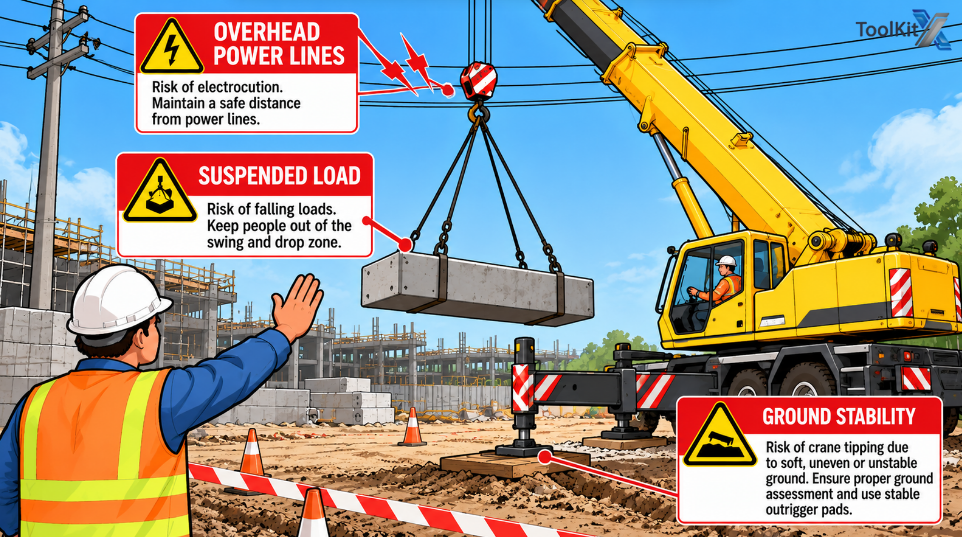
Exceeding rated capacity or lifting with an unsuitable setup can destabilize a crane. Weak ground and incorrect outrigger placement add risk.
Control: confirm the load weight and crane configuration against the correct load chart, assess ground conditions and use suitable outrigger support. Do not lift when the load weight or capacity is uncertain.
-
Falling loads and rigging failures
Damaged slings, defective hooks, incorrect rigging or poorly secured loads can cause materials to fall and seriously injure nearby workers.
Control: choose accessories suitable for the load, inspect them before use, secure the load correctly and use competent riggers. Keep workers clear of suspended loads and stop if the load becomes unstable.
-
Overhead power lines
A boom, lifting line or load contacting an overhead electrical line can cause fatal electrocution.
Control: identify electrical lines during lift planning and follow applicable clearance requirements. Use the required controls, which may include isolation, barriers, warning systems or a dedicated observer. Verify arrangements before lifting begins. OSHA addresses power line hazards in its construction crane rules.
-
Struck by incidents and collisions
Moving loads, a crane’s swing radius, blind spots and nearby vehicles can expose workers to crushing or struck by injuries.
Control: define the working area, restrict unauthorized access and agree on clear signaling. Use a signal person when required, maintain communication and stop the lift if the operator or team cannot confirm that the movement is safe.
-
Mechanical failure and inadequate inspection
Damaged wire ropes, worn lifting accessories, defective safety devices and poor maintenance can lead to equipment failure.
Control: complete required pre use checks, maintain equipment according to manufacturer guidance and arrange examinations required by local rules. Remove unsafe equipment from service. A pre use check does not replace a required thorough examination.
-
Weather and poor visibility
Wind can move suspended loads and affect stability; fog, rain, lightning or poor lighting can interfere with visibility and control.
Control: monitor site conditions, follow the manufacturer’s limits and reassess when weather changes. Suspend lifting when safe control cannot be maintained. Avoid assuming one wind speed limit applies to every crane and load.
What to Check Before a Lift
Confirm that the crane suits the task, the load weight and route are understood, the load chart matches the configuration, rigging is appropriate, and ground and setup conditions are safe. Check the lift plan, exclusion zone, signals, equipment condition and each person’s role. If the actual conditions differ materially from the plan, reassess before proceeding.
Regulations and Responsibilities
In the UK, the Lifting Operations and Lifting Equipment Regulations 1998 (LOLER) require lifting operations to be planned by a competent person, appropriately supervised and carried out safely. PUWER may also apply to equipment suitability, maintenance and inspection.
In the United States, OSHA’s 29 CFR Part 1926, Subpart CC covers cranes and derricks in construction, including inspections, signaling and power line safety. Requirements vary by jurisdiction and work activity, so consult the rules that apply to the site.
FAQs
What are the most common crane safety hazards?
Common crane safety hazards include overloading, overturning, falling loads, rigging failures, power line contact, collisions, mechanical defects and adverse weather. Risks vary with crane type, lifting task and site conditions, so the controls should be selected for the actual operation.
How can crane accidents be prevented?
Use competent lift planning, correct load assessment, suitable equipment, inspections, trained personnel and clear communication. Establish exclusion zones, monitor changing conditions and stop work whenever the lift cannot be completed safely.
Why are crane load charts important?
Load charts show rated capacities for specified crane configurations and operating conditions. Capacity can change with lifting radius, boom arrangement and other factors. Operators must use the correct chart rather than relying on a headline capacity alone.
How does weather affect crane safety?
Wind can cause a load to swing and affect crane stability, while poor visibility can disrupt signaling and load control. Monitor conditions, follow manufacturer guidance and suspend operations whenever weather prevents safe lifting.
Are pre use inspections enough?
No. Pre use checks help identify visible problems but do not replace maintenance or required thorough examinations. Inspection frequency and examination requirements depend on the equipment, how it is used and the applicable rules.
Next step: Review the lift plan and pre use checks together to ensure each major hazard has a control, an assigned owner and a way to verify it.
Explore HSE Management System @ https://toolkitx.com/campaign/hse/