Why a Workplace Safety Checklist Matters Every Single Day
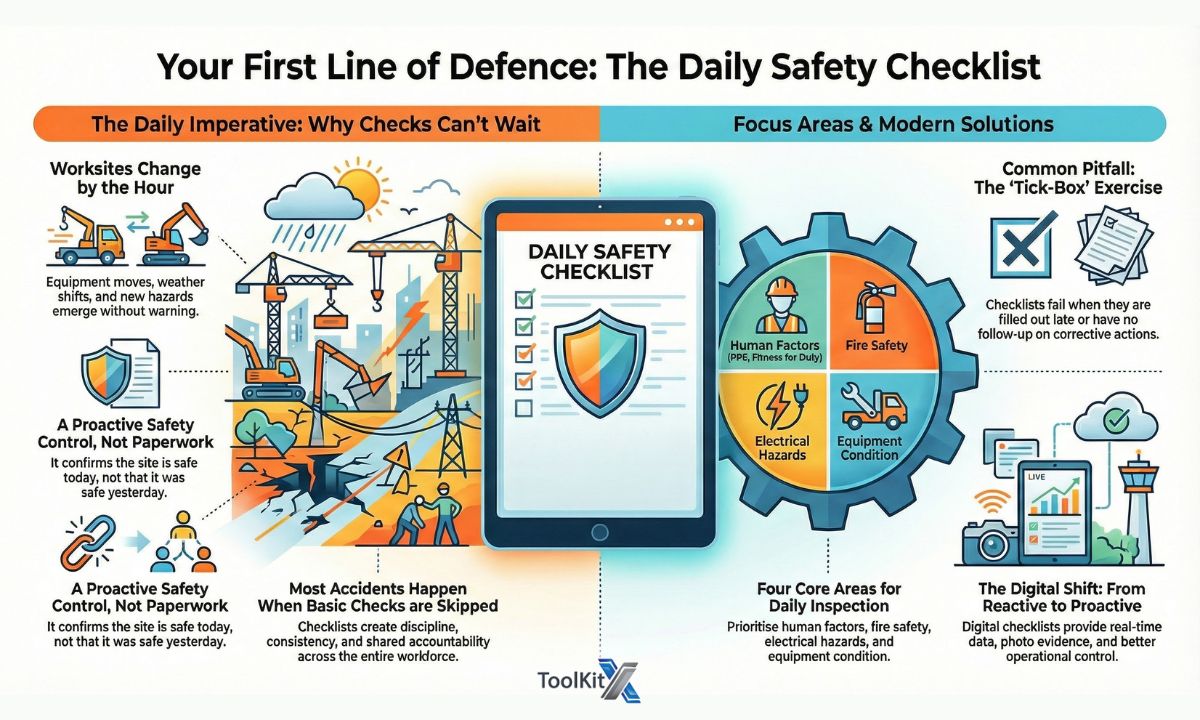
In construction and utility operations, workplace safety risks aren't just static - they change by the hour. You’ve got equipment being moved around, the weather can turn in a heartbeat, different contractors are coming and going, and new hazards seem to pop up out of nowhere. That's why just relying on the occasional inspection just isn't good enough. A daily Workplace Safety Checklist is a vital first line of defence against those avoidable accidents.
Seasoned HSE leaders know all too well that the majority of workplace accidents don’t happen because there weren’t enough rules in place, but because basic safety checks were skipped, rushed or just plain assumed. A daily checklist helps to create discipline, consistency and shared responsibility across the whole workforce.
What Is a Workplace Safety Checklist?
A Workplace Safety Checklist is essentially a structured daily rundown to make sure people, equipment and the working environment are good to go before you start work. Its about confirming that all the safety controls are actually working in real life - not just documented on paper.
In practical terms, its about making sure the site is safe for today's work, not just safe yesterday or last week. For construction and utilities, that usually means checking on worker readiness, fire risks, electrical safety, equipment condition and general site housekeeping.
Why Daily Safety Inspections Are Critical in Construction & Utilities
In high-risk industries, hazards are constantly evolving. Excavation depths are changing, temporary electrical connections are being altered, scaffolding is being reconfigured, and confined spaces are opening and closing all day long. And without a daily Workplace Safety inspection checklist, all these changes go undocumented and unmanaged.
From an industry best-practice standpoint, routine inspections are a key part of proactive risk management. They also serve as solid evidence of good practice during audits, incident investigations and regulatory reviews.
Health and Safety in the Workplace Checklist: Human Factors First
A well-designed Health and Safety in the Workplace Checklist puts people first - not just equipment. Before any job starts, supervisors need to make sure workers are fit for duty, trained for the job and wearing the right PPE.
And just as important is the state of the work environment. Poor housekeeping, blocked access routes, or unclear signs may seem like minor issues, but they can often lead directly to slips, trips, delayed evacuations, and disaster response failures. Tackling these issues early on prevents them from getting out of hand.
Fire Safety Checks: Often Overlooked, Always Critical
Fire hazards are one of the most underestimated risks on active worksites. A quick Workplace Checklist Fire Safety helps verify that basic controls are in place before ignition sources are introduced. That means checking that fire extinguishers are on hand, hot work permits are valid, and combustible materials are properly stored.
On bigger or higher-risk sites, a more comprehensive fire safety checklist for the workplace should also confirm that alarms are working, evacuation routes are clearly marked, and fire wardens are identified. These checks are especially vital in temporary or rapidly changing site layouts where escape routes can easily become blocked.
Workplace Electrical Safety Checklist: Managing Invisible Risks
Electrical hazards are particularly scary because the risks arent always visible. Temporary power arrangements, damaged cables, and unauthorized connections all make it more likely that someone will get a shock, burn or start a fire. A daily Workplace Electrical Safety Checklist makes sure that electrical systems are isolated, grounded and good to go.
Many serious incidents occur when teams assume that electrical isolations from the previous shift are still in place. Daily verification rules out this assumption and reinforces lockout and tagout discipline.
Inspection of Equipment and Work Areas
A comprehensive Workplace Health and Safety Inspection Checklist also covers machinery, tools, lifting equipment, and access structures. You need to visually inspect guards, interlocks, scaffolds and barricades to make sure they’re still secure and compliant.
This is especially important in construction and utilities where shared equipment is being used by multiple crews. Even a minor defect, if it gets missed, can quickly lead to some pretty severe injuries.
Common Mistakes That Reduce Checklist Effectiveness
A lot of companies technically do the inspection thing but in reality, they're not getting much out of it. A major problem is filling out checklists after the work's already got underway. Another common mistake is treating inspections like some sort of tick-box exercise, where it's just a matter of checking off boxes and being done with it - rather than actually taking the time to properly review and address any issues that come up. And God help you if you're still using paper-based systems - because then you're lucky if you can even find your records, let alone get around to reviewing them in a timely fashion.
When inspections aren't tied to accountability, those hazards just keep getting overlooked - and before you know it, incidents are happening left and right.
The Shift Toward Digital Workplace Safety Checklists
Modern safety programs are now increasingly turning to digital systems as a way to keep inspections consistent across different sites. Digital safety inspection checklists allow teams to collect real-time data, take photos, assign tasks to fix things, and keep a single, up to date record of everything that's been done.
But there's something else even more important: digital systems let daily inspections be tied together with permits to work, risk assessments, and audits - turning safety from something you only do in response to a problem into an active part of how your operation runs from day to day.
Strategic Value Beyond Compliance
A good workplace safety checklist, when its being used consistently, offers benefits that go way beyond just making sure you're meeting all the rules and regulations. Instead of having work grind to a halt, you get a stronger culture around safety, contractors do a better job, and you can respond faster to any potential problems that come up. And with all the data that's collected from these inspections, you can actually take a closer look at the trends that are emerging, which then lets your leaders make better informed decisions about training, controls and where to put your resources.
Lots of companies are ditching the old ways and switching to all in one digital HSE platforms to make life easier for their teams with daily inspections, permits, risks & audits all in one place. Platforms like ToolKitX really do cut the complexity out of workplace safety checklists, providing a clearer view of whats going on across all your projects in one glance – without adding to an already heavy workload for your admin crew.
The truth is when companies start using a platform like ToolKitX, they end up with a much better view of whats going on upfront, tons more confidence in their compliance and a real handle on their operations.
A daily Workplace Safety Checklist is far more than just a load of paperwork - it's a vital frontline safety tool. When you're doing it regularly and backing it up with some clever digital tools, it not only keeps your crew safe but also helps make day to day running of your operations a lot smoother - and sends a clear message that you genuinely care about keeping people safe on construction and utility sites.